Cryptomaidav Basics
Bitcoin Explained
A network without a centre, a fixed cap and a public ledger: how Bitcoin works and what you should know before getting started.
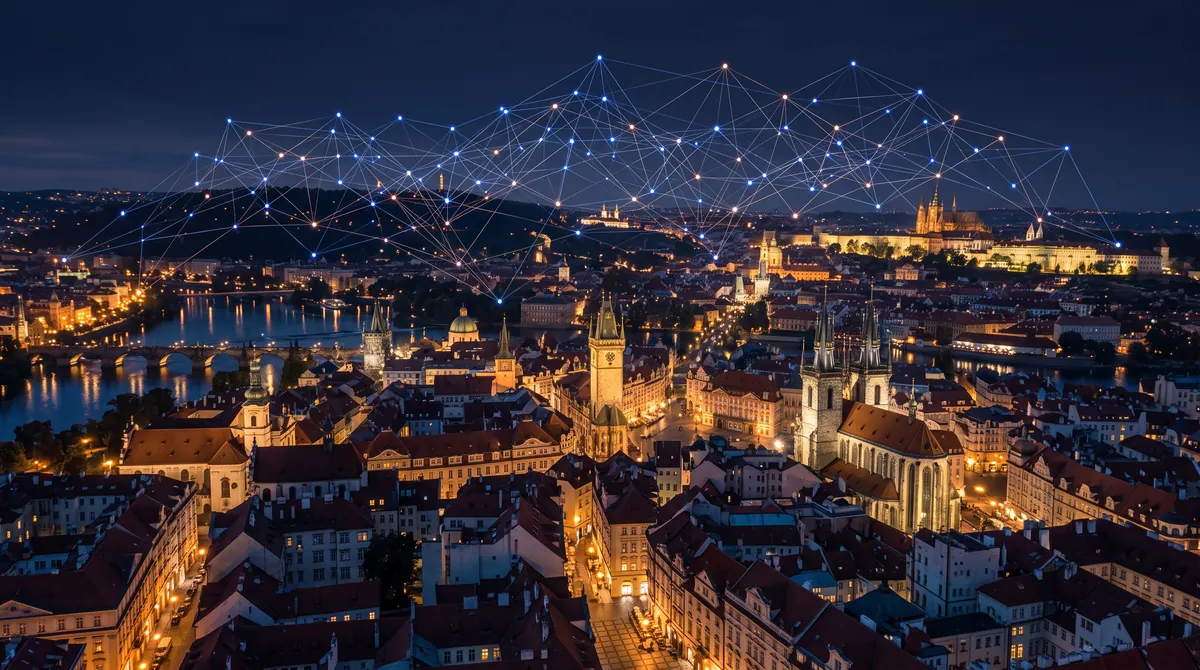

Bitcoin is the oldest and best-known cryptocurrency. Behind the name lie a network without a central authority, a public ledger and a fixed maximum supply of 21 million units. This article explains how the system came about, how new blocks and new bitcoin are created, why the reward for mining is halved at regular intervals, and what you should know about buying, custody, risks and taxation in Germany.
From white paper to network
On 31 October 2008, a person or group using the name Satoshi Nakamoto published a nine-page paper on a cryptography mailing list under the title ‘Bitcoin: A Peer-to-Peer Electronic Cash System’. The idea was electronic money that is transferred directly between two parties, without a bank acting as an intermediary. Who is behind the name has still not been established.
The first block was created on 3 January 2009, and a few days later the software was made publicly available. New blocks have been added continuously ever since. The network belongs to no one: it is carried by thousands of computers around the world that apply the same rules. Changes to these rules only take hold if a large share of the participants adopt them.
A ledger that everyone keeps
At the heart of Bitcoin is the blockchain, a public ledger that records every transfer since 2009. Transactions are bundled into blocks, and each new block contains a digital fingerprint of the previous one, known as the hash value. The result is a chain in which old entries can hardly be altered after the fact, because all subsequent blocks would then have to be recalculated.
The computers that store the ledger and check new transactions are called nodes. Each node can verify for itself whether a payment is valid, in other words whether the sender actually holds the bitcoin and has not already spent them. Solving this problem of double spending without a central authority was the real breakthrough of the white paper.
Public does not mean named. The ledger contains no names, only addresses, which are strings of characters. Who uses an address can nevertheless come to light, either through trading platforms that are required to identify their customers or through the analysis of payment flows. Experts therefore speak of pseudonymity.
Mining and proof of work
New blocks are created through mining. Specialised computers search for a number that makes the hash value of the new block meet a predefined condition, and this can only be achieved by trying out enormous numbers of possibilities. Whoever finds a suitable solution first may add the block, and the other nodes check the result in a fraction of a second. The procedure is called proof of work.
The network adjusts the difficulty at regular intervals so that, on average, a block is created roughly every ten minutes, regardless of how much computing power is involved. As a reward, the successful miner receives newly created bitcoin plus the fees for the transactions in the block.
Proof of work consumes a great deal of electricity, because computers around the world compete for every block. How high consumption is, and what share comes from renewable sources, can only be estimated. Supporters regard this as the price of the network’s security, while critics point to its climate footprint. The EU’s Markets in Crypto-Assets Regulation (MiCA) requires crypto-asset service providers to publish information on environmental impact.
Fixed cap and halving
The issuance of new bitcoin follows a fixed schedule. At the start, the block reward was 50 bitcoin. Every 210,000 blocks, which is roughly every four years, it is halved. The most recent halving took place in April 2024 at block 840,000, and since then miners have received 3.125 bitcoin per block. The next halving is scheduled for block 1,050,000.
Because of this continuous halving, the total supply approaches a cap of 21 million bitcoin. One bitcoin can be divided into 100 million smallest units, which are called satoshis after the inventor. You therefore do not need to buy a whole bitcoin. The cap is one reason why some people compare Bitcoin with gold. It says nothing about value, however: the price results from supply and demand, and demand can change quickly.
Keys, wallets and buying
Your bitcoin are not stored on your device as a file but exist as entries in the ledger. To control them, you need a private key, which you use to sign transactions digitally. Software or devices that manage such keys are called wallets. How self-custody and custody by a provider work is explained in the article Wallets and Custody.
Purchases are usually made through a crypto-asset service provider. Since 30 December 2024, these providers in the EU have been subject to the Markets in Crypto-Assets Regulation (MiCA). They need authorisation, and the transitional periods expired on 1 July 2026 at the latest. Whether a provider is authorised can be checked in the company database of Germany’s Federal Financial Supervisory Authority (BaFin) and in the register of the European Securities and Markets Authority (ESMA). Bitcoin itself has no issuer, so it is above all the services that are regulated.
Products that track the performance of Bitcoin are also traded on stock exchanges, in Europe often as debt securities known as exchange-traded notes (ETNs). Buyers of these products do not own any bitcoin but hold a claim against the issuer. In addition to price risk, there is therefore issuer risk and custody risk, and the tax treatment can differ from that of holding bitcoin directly.
A sober look at the risks
The price of Bitcoin fluctuates sharply, even within a few days, and phases of strong rises and deep slumps have alternated several times. BaFin classifies crypto-assets as highly speculative, and losses up to and including a total loss are possible. There is no deposit guarantee scheme of the kind that protects bank balances. The main risks include:
- Price swings with large losses in value within a short time
- Loss of access if the keys or the recovery phrase are missing
- Deception attempts in which fraudsters pose as customer support
- Mistaken transfers, because confirmed transactions cannot be reversed
- Changes in regulation and tax law
Tax for private individuals in Germany
In Germany, bitcoin held as private assets falls under the rules for private disposal transactions (private Veräußerungsgeschäfte) in Section 23 of the Income Tax Act (Einkommensteuergesetz, EStG), not under the flat 25 per cent capital gains tax (Abgeltungsteuer) that applies to shares. If you sell bitcoin within one year of buying it, any gain is taxed at your personal income tax rate. If more than one year lies between purchase and sale, the gain remains tax-free. Exchanging bitcoin for another crypto-asset or paying for goods with bitcoin also counts as a disposal.
Since 2024, each person has had an exemption limit (Freigrenze) of 1,000 euros per calendar year for all private disposal gains combined. An exemption limit is not a tax-free allowance (Freibetrag): if total gains reach 1,000 euros, the full amount is taxable. Losses can only be offset against gains from private disposal transactions. The details are set out in a circular from the Federal Ministry of Finance dated 6 March 2025.
| Assumption: purchase of a fraction of a bitcoin | €2,000 |
|---|---|
| Sale after eight months | €2,900 |
| Fees for purchase and sale | €20 |
| Gain | €880 |
| Other private disposal gains in the year | none |
| Result | below the exemption limit, tax-free |
The figures are purely illustrative. If the gain were 1,000 euros or more, the entire amount would be taxable, not just the part above the limit. After a holding period of more than one year, the gain would be tax-free whatever its size.
A fixed maximum supply limits what is available, but it does not determine the price.
Bitcoin is a technical system with publicly visible rules and, at the same time, a market with sharply fluctuating prices. If you understand the ledger, mining, the supply cap, custody and the tax rules, you can put news and offers into context more easily. Common terms are explained in the Business Glossary. Whether Bitcoin suits your own financial situation remains a personal decision that calls for careful consideration of the risks.
Frequently asked questions
Do you have to buy a whole bitcoin?
No. One bitcoin can be divided into 100 million units, the smallest of which is called a satoshi. Trading platforms therefore also let you buy small fractions. What matters for your assessment is not the number of units but the amount in euros that you invest and the risk you take on with it.
Who controls the Bitcoin network?
No single body. The network is carried by many independent nodes and miners that apply the same rules. Changes to the software only take hold if a large share of the participants adopt them. States can, however, regulate how trading platforms and other service providers around Bitcoin operate, as the EU has done with MiCA.
What happens at a halving?
Every 210,000 blocks, which is roughly every four years, the number of new bitcoin a miner receives for a block is halved. Since April 2024 it has been 3.125 bitcoin per block. As a result, the total supply grows ever more slowly and approaches the cap of 21 million. What this means for the price cannot be predicted.
When are gains from bitcoin tax-free in Germany?
For private assets, gains are tax-free if more than one year passes between purchase and sale. With a shorter holding period, they only remain tax-free if all private disposal gains in a year together amount to less than 1,000 euros. Exchanging bitcoin for other crypto-assets also counts as a disposal. For questions about your individual case, a tax adviser can help.
Terms
- Proof of work
- A procedure in which computers solve a computational puzzle through extensive trial and error and thereby earn the right to add a new block to the blockchain.
- Halving
- The halving of the block reward for miners, which in Bitcoin takes place every 210,000 blocks and therefore roughly every four years.
- Satoshi
- The smallest unit of Bitcoin, equal to 0.00000001 bitcoin and named after the pseudonym of its inventor.
Sources
- Bitcoin: A Peer-to-Peer Electronic Cash System (white paper, 2008)Satoshi Nakamoto, published on bitcoin.org
- Questions regarding the income tax treatment of specific crypto-assets in Germany (courtesy translation of the BMF circular of 6 March 2025)Bundesministerium der Finanzen
- Einkommensteuergesetz, § 23 Private Veräußerungsgeschäfte (in German)Bundesministerium der Justiz
- Amtliches Einkommensteuer-Handbuch 2025: Freigrenze für private Veräußerungsgewinne (in German)Bundesministerium der Finanzen
- Merkblatt Kryptowerte-Dienstleistungen nach MiCAR (in German)Federal Financial Supervisory Authority (BaFin)
Image: illustration, created with AI.