Innovationmaidav Focus
How Fintechs Are Changing Traditional Banking
An account in minutes, a payment in seconds, a loan based on data analysis: what financial start-ups do differently and how banks are responding.
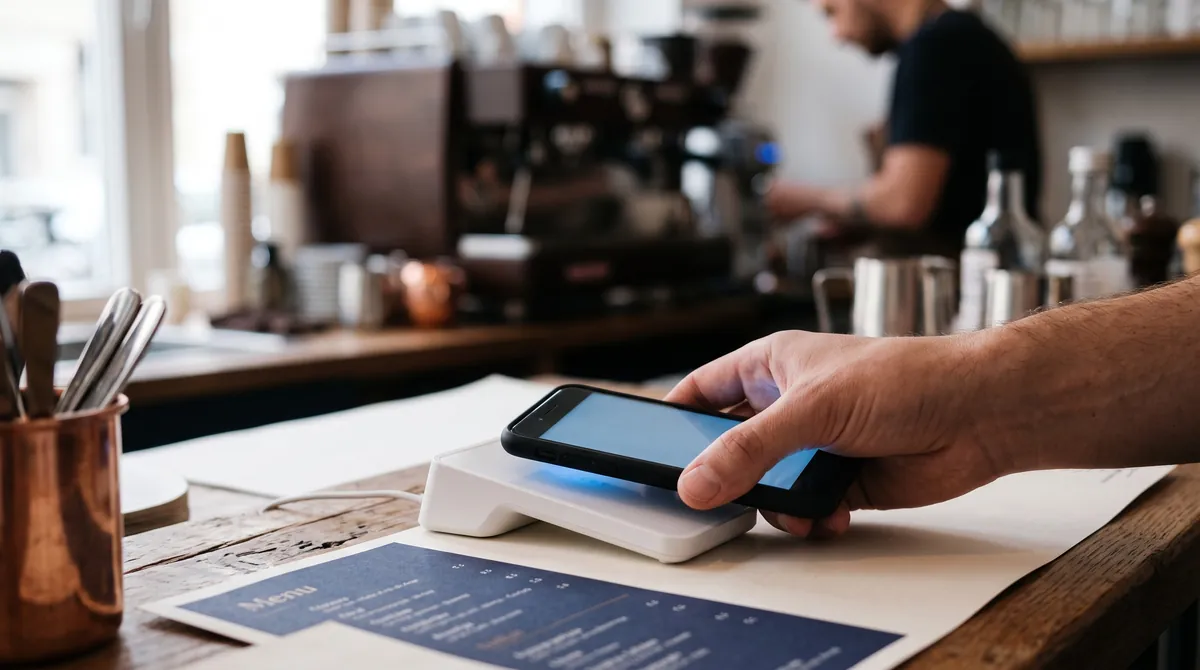

An account opened in a few minutes, a transfer that arrives in seconds, a loan offer based on account data: much of what was new ten years ago is part of everyday life today. This development was often set in motion by young financial companies, the fintechs. This article shows in which areas they have changed banking services, which rules apply to them, how established banks are responding and what business owners gain from it in their day-to-day work.
What makes a fintech
Fintech is short for financial technology and refers to companies that offer financial services mainly in digital form. Their approach is usually narrower than that of a universal bank. They concentrate on one product or process, such as payments, account management, loans or investing, and design it consistently for the smartphone or for connection to other software. Short development cycles, streamlined user interfaces and open interfaces to other systems are at the core of the model.
For customers, where an innovation comes from often no longer matters. What fintechs pioneered has long been offered by banks and savings banks (Sparkassen) as well. Therein lies the sector's real influence: it has changed expectations of speed, ease of use and transparency, and the whole market now takes its bearings from these expectations.
Payments in seconds
The change is most visible in payments. With the EU Instant Payments Regulation, Regulation (EU) 2024/886, instant credit transfers in euros have become the standard. Banks in the euro area have had to be able to receive them since 9 January 2025 and to send them since 9 October 2025, while later deadlines apply to payment institutions and e-money institutions. As a rule, the money is credited within ten seconds at most, around the clock and at weekends too. An instant transfer may not cost more than a conventional transfer.
Since 9 October 2025 there has also been verification of payee. Before a transfer is authorised, the bank compares the name entered with the IBAN and reports whether the details match, almost match or do not match. For businesses that make many payments, this means that well-maintained master data for suppliers and service providers saves queries and delays. At the same time, money arriving so quickly changes liquidity planning, because instant payments are available immediately, even at weekends.
Accounts, credit and investing go digital
When it comes to opening an account, digital procedures have largely replaced the trip to the branch. The identification required under the German Anti-Money Laundering Act (Geldwäschegesetz) is carried out by video or with the online ID function of the German identity card. Neobanks, that is banks without their own branch network that offer their services mainly through an app, made this process standard early on. Business accounts often add sub-accounts for tax reserves, virtual cards for employees or the capture of receipts directly in the app.
Lending to small businesses is also becoming more digital. With their customers' consent, lending platforms and banks analyse account transactions, accounting data or incoming payments and, on this basis, often reach a decision faster than under the traditional procedure. For investing, there is digital asset management, often called a robo-adviser: after a questionnaire on goals and willingness to take risk, an algorithm puts together a portfolio and adjusts it regularly. Finally, digital insurers sell and manage policies largely through the app, right up to reporting a claim.
Open interfaces and embedded finance
One legal basis for many innovations is the second Payment Services Directive, PSD2 for short, which has applied in Germany since 13 January 2018. It obliges banks to give authorised third-party providers access to the payment account via an interface, provided the customer consents. Two services have grown out of this: account information services combine the transactions of several accounts at different banks in a single overview, and payment initiation services trigger a transfer directly from an online shop or a piece of software. This principle of open account interfaces is known as open banking.
For business owners, this is often invisible in everyday work and yet noticeable. Accounting software retrieves account transactions automatically and matches them to open invoices, and liquidity overviews show all accounts at a glance. Then there is embedded finance: payments, financing or insurance appear exactly where they are needed, for example as an instalment purchase in online retail or as a financing offer in industry-specific software. At the end of 2025, the Council of the EU and the European Parliament also reached a political agreement on a further development of the payment services rules, intended above all to strengthen protection against fraud and transparency on fees.
| Incoming payments per month | 300 |
|---|---|
| Manual matching per payment so far | 3 minutes |
| Effort per month so far | 15 hours |
| Matched automatically via the account connection | 80 %, or 240 payments |
| Remaining manual cases | 60 payments, 3 hours |
| Spot checks of the automatic matching | 1 hour |
| Saving per month | 11 hours |
All figures are assumed example numbers. How high the automatic matching rate actually turns out to be depends above all on whether customers quote invoice numbers in the payment reference and how well the master data is maintained.
The rules that apply to providers
Anyone who offers financial services in Germany generally needs a licence. There are important differences here. A bank with a full banking licence, referred to in law as a credit institution, may accept deposits and grant loans. It submits its application to BaFin, Germany's Federal Financial Supervisory Authority, but in the euro area the decision on the licence is taken by the European Central Bank. Payment institutions and e-money institutions need authorisation from BaFin under the German Payment Services Supervision Act (Zahlungsdiensteaufsichtsgesetz). They may process payments or issue electronic money, but they may not accept deposits as a bank does. Pure account information services must register with BaFin.
This difference matters for your own money. Balances held at a bank are protected by the statutory deposit guarantee up to 100,000 euros per depositor and bank, and this also applies to companies. Exceptions include financial firms, insurers and public bodies. An e-money institution, by contrast, does not accept deposits within the meaning of deposit protection. However, it must keep its customers' funds separate from its own assets, for instance by holding them in segregated accounts at a bank or by covering them with an insurance policy or a guarantee. How businesses can spread their reserves across accounts is described in the article on cash reserves.
With any financial solution, what counts first is the licence behind it and how the money is protected.
Cooperation rather than confrontation
The early story of start-ups attacking the banks has turned out to be too simple. Today, partnerships predominate. Banks integrate fintech solutions via interfaces, take stakes in young companies or adopt successful ideas in their own apps. Fintechs, in turn, use the licence, infrastructure and balance sheet of established institutions if they do not hold a full banking licence themselves. When a licensed bank makes its infrastructure available to other providers, this is known as banking as a service.
In the end, what matters to customers is less who invented a solution than whether it works reliably, is supervised and fits into their own processes. In business banking in particular, the connection to accounting, inventory management and the tax adviser often decides whether an innovation actually saves time in the business. How digital registers could also change securities is shown in the article on tokenisation.
Fintechs have made banking services faster, clearer and more connected, and the competition has changed the entire sector. For business owners, the result is above all a toolbox: instant payments, automatic account retrieval and digital lending processes can noticeably shorten workflows. The value of these tools, however, depends less on the technology than on the care with which a business selects its providers, maintains its data and organises its financial processes.
Frequently asked questions
Is an instant transfer more expensive than a normal transfer?
Under the EU Instant Payments Regulation, instant transfers in euros may not cost more than comparable conventional transfers. The actual fees depend on the pricing model of the institution concerned and are set out in its list of prices and services. With some account models, transfers are already included in the monthly basic fee.
Is money held at an e-money institution covered by deposit protection?
Not in the sense of the statutory deposit guarantee, because e-money institutions do not accept deposits. However, they must safeguard their customers' funds separately from their own assets, for instance in segregated accounts at a bank or through an insurance policy or a guarantee. How a provider does this should be described in the contract documents.
What does open banking mean for my account data?
An authorised third-party provider may access your payment account only with your explicit consent, for example to display transactions in accounting software or to initiate a payment. Consent can be withdrawn. When granting access, pay attention to which accounts you include and what the service is allowed to use the data for.
How can I tell whether a provider is supervised?
BaFin maintains a public company database in which you can search for a provider by name. It shows which licence or registration is in place. Payment and e-money institutions are also listed in the register of institutions kept under the German Payment Services Supervision Act. The database also includes providers from other EU countries that operate in Germany on a cross-border basis.
Terms
- Instant credit transfer
- A euro transfer that is executed around the clock and is usually credited within ten seconds at most.
- E-money institution
- A company authorised by BaFin that issues electronic money and processes payments but does not accept deposits as a bank does.
- Open banking
- The opening of payment accounts to authorised third-party providers via interfaces, provided the customer consents.
Sources
- Fragen und Antworten zu Echtzeitüberweisungen und Empfängerüberprüfung (in German)Deutsche Bundesbank
- PSD2Deutsche Bundesbank
- Activities of payment institutions, e-money institutions and account information servicesFederal Financial Supervisory Authority (BaFin)
- Database of companiesFederal Financial Supervisory Authority (BaFin)
- Einlagensicherungsgesetz, § 8 Höhe des Entschädigungsanspruchs (in German)Bundesministerium der Justiz
Image: illustration, created with AI.